Meet the FreeState Staff: Naomi Berhe

Joel Medina • July 10, 2025

 Why I Chose FreeState Justice and What This Work Means to Me

Naomi Berhe (She/HER)

Communications Intern

I first heard about FreeState Justice on the very first day of my Psychology of Women and Gender class in Spring 2024. My professor, whom I deeply admire, mentioned that she also worked at the organization, and I instantly lit up. As someone passionate about advocacy and mental health, especially for women and queer communities, I knew I wanted to be part of something like that. So when she later referred me for this internship, I was incredibly grateful and honestly emotional when I found out I’d been selected.


For me, working at FreeState isn’t just a professional opportunity, it’s deeply personal. As a Black, pansexual woman who’s experienced the pain of being unsupported by my family and subjected to shame that made self-acceptance feel nearly impossible, I know what it feels like to be left out of the systems that are supposed to protect and affirm us. I’m still actively healing from that experience, and in many ways, FreeState has become part of that healing. Being surrounded by people who not only affirm my identity but work so hard to uplift it has helped me reclaim parts of myself I was once made to feel ashamed of. That kind of isolation is hard to put into words, but it’s something so many of our clients unfortunately live through. It’s why the work we do matters, not just in courtrooms or clinics, but in how we remind people they’re worthy of care, safety, and dignity.


At FreeState, I support the communications team by creating content and managing our social media accounts, as well as supporting our numerous digital campaigns in a way that highlights our services, amplifies community voices, and strengthens our outreach. Whether I’m helping draft a press release, promoting a clinic, or spotlighting the stories behind our advocacy, I see the power in every word we share. Every piece of content is a chance to reach someone who might feel alone or unseen. It’s powerful to be part of an organization that not only informs people of their rights, but also helps them feel like they belong in a world that too often tries to erase them.


Working here has been incredibly fulfilling, not just because of what we do, but how we do it. I’ve seen firsthand how much intention and care goes into every interaction, whether it’s between staff members or with our clients. There’s a deep sense of responsibility and compassion that runs through this organization, and it shows in everything from the way we show up for each other to the way we advocate for our communities. That kind of culture, where values aren’t just stated but lived, has been powerful to witness, and even more powerful to be part of.


Being here has helped me channel my pain into purpose. It has reminded me that advocacy can be healing, and that telling the truth boldly and unapologetically is a form of resistance. I’m proud to be part of a team that doesn’t just fight for justice, but embodies it.


Want to help ensure that Naomi can continue her work of making Maryland inclusive for all? Then please consider making a donation to FreeState Justice here.
By Phillip Westry February 25, 2026
FreeState Justice is proud to announce that it has been awarded a Black Abundance Collective Grant from the Meyer Foundation — the largest single grant in the organization’s history. This investment was bestowed in recognition of FreeState Justice’s trailblazing advocacy providing pro bono legal services for LGBTQ+ Marylanders. With over a decade of history fighting for marginalized populations, this grant marks a pivotal step in our fight to advance the liberation of Black LGBTQ+ people everywhere. “Black queer people have always shaped the direction of the LGBTQ+ movement,” said Phillip Westry, Esq., Executive Director of FreeState Justice. “This moment is about ensuring that our leadership is matched with sustained investment, institutional power, and structural change.” Black LGBTQ+ Marylanders navigate intersecting systems of racial inequity, economic marginalization, and anti-LGBTQ+ discrimination — and even within advocacy spaces, their leadership and lived experience are not consistently centered in policy strategy, funding priorities, or institutional decision-making. In Maryland, a state often viewed as progressive on LGBTQ+ issues, these disparities in power and representation remain very visible. This grant is an investment in shifting that power. Under the leadership of Westry, Legal Director Lauren Pruitt, Esq., and Community Impact Director Ronnie L. Taylor, FreeState Justice will utilize these funds to: Expand affirming legal services that prioritize Black LGBTQ+ Marylanders Advance policy solutions that address race, gender identity, sexual orientation, and economic justice together Build leadership pathways for Black LGBTQ+ advocates statewide Strengthen the long-term infrastructure of Black-led movement institutions “This historic grant is not just a funding milestone for FreeState—it is a powerful affirmation of our commitment to uplifting Black LGBTQ+ communities in our legal advocacy,” said Pruitt. “We are grateful for this investment and energized to use it to confront inequity, break down barriers to justice, and help build a future in which every Black LGBTQ+ Marylander can thrive. The award reflects years of disciplined strategic planning, governance strengthening, and statewide expansion. It positions this organization to move beyond reactive advocacy and toward proactive, community-rooted systems of transformation. FreeState Justice is grateful to the Meyer Foundation for recognizing that investing in Black abundance strengthens the entire movement for LGBTQ+ equity in Maryland. “This is not symbolic funding. It is a structural investment,” said Taylor. “Black queer people in Maryland have carried movements on our backs while being locked out of power and long-term resources. This grant enables us to build the infrastructure our communities deserve. It allows us to lead without apology and without scarcity shaping our vision. Black abundance is not just a slogan — it is a mandate to shift who holds power, who sets priorities, and who benefits from the work. At FreeState Justice, we are ready to meet that mandate." Black LGBTQ+ voices will not simply be included — they will define the agenda.
By Traé McWhite ||| February 23, 2026
Eating disorders affect people of all genders, identities, and bodies — but access to affirming care is not equal. This week is deeply important to me personally and professionally. I’ve lived with an eating disorder since 2009 and at one point was hospitalized for 6.5 months during my treatment journey — an experience that changed how I understand trauma, healing, and access to care. I know firsthand how isolating it can feel, especially when systems aren’t built for queer, trans, BIPOC, or otherwise marginalized bodies. I also know that recovery is possible, and that visibility saves lives. I know how terrifying and lonely this experience can be, but I also know healing is possible. Research shows that LGBTQ+ individuals experience significantly higher rates of eating disorders than their heterosexual and cisgender peers. For example, lesbian, gay, and bisexual people are more than twice as likely to develop disordered eating, and transgender people are nearly 11 times more likely than cisgender peers to have an eating disorder. These disparities stem from minority stress, discrimination, and repeated invalidation — not identity itself. ( uwa.edu.au ) Weight stigma — including bias against larger bodies — and rigid diagnostic criteria like BMI cutoffs continue to bar people from treatment, even when they are struggling with life‑threatening symptoms. Financial barriers, lack of insurance coverage, and a shortage of inclusive providers only make this worse for people with marginalized identities. ( Project HEAL ) At FreeState Justice, our mission is grounded in dignity, equity, and access. Eating Disorders Awareness Week is a call to break stigma, challenge bias, and ensure that everyone, in every body and from every community, has access to affirming, life‑saving care. You are not alone — and seeking help is strength. 
By Ronnie L. Taylor February 13, 2026
Tracking Power, Policy, and Accountability 
By Joel Medina February 3, 2026
FreeState Justice commends last week’s ruling by the U.S. Court of Appeals for the Fourth Circuit affirming that Montgomery County Public Schools (MCPS) may require staff to respect transgender students’ pronouns and protect student privacy. The decision upholds long-standing principles that schools have both the authority and the responsibility to provide safe, inclusive learning environments for all students, including transgender and nonbinary youth. In a 2–1 decision issued on January 28th, the Fourth Circuit upheld a lower court’s denial of a request by a substitute teacher seeking an exemption from MCPS guidelines that require staff to use students’ affirmed names and pronouns and prohibit disclosure of a student’s transgender status without consent. The court found that the district’s policy applies equally to all educators and is not motivated by religious hostility or discrimination. “This ruling affirms what LGBTQ+ students and their families have always known: respect is not optional, and student safety must come first,” said Phillip Westry, Executive Director at FreeState Justice. “Transgender students deserve to be recognized for who they are at school—without fear that their identity will be questioned, disclosed, or debated.” The court’s decision means the plaintiff will not be permitted to teach in MCPS schools without complying with district policy. This case marks the second time in recent years that the Fourth Circuit has addressed MCPS policies impacting LGBTQ+ students. While the Supreme Court reversed a separate 2024 decision involving parental opt-outs from LGBTQ+-inclusive classroom materials, last week’s ruling makes clear that schools may continue to require staff to respect transgender students’ identities and safeguard their privacy. FreeState Justice remains committed to advocating for policies that protect the dignity, safety, and rights of LGBTQ+ Marylanders—especially young people—so they can live and learn free from discrimination.
By Joel Medina January 29, 2026
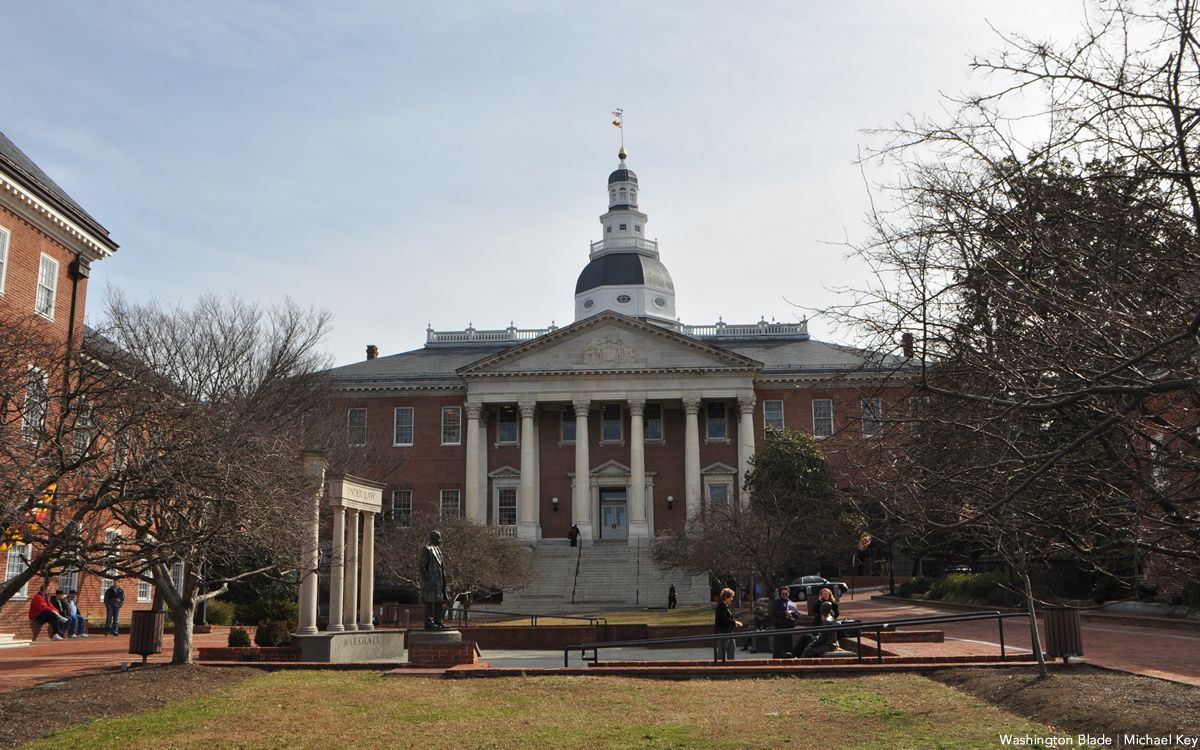
As Featured In the Washington Blade, written by Sam Epner FreeState Justice this week spoke with the Washington Blade about their priorities during this year’s legislative session in Annapolis that began on Jan. 14. Ronnie L. Taylor, the group’s community director, on Wednesday said the organization continues to fight against discrimination against people with HIV/AIDS. FreeState Justice is specifically championing a bill in the General Assembly that would expand access to PrEP in Maryland. Taylor said FreeState Justice is working with state Del. Ashanti Martinez (D-Prince George’s County) and state Sen. Clarence Lam (D-Arundel and Howard Counties) on a bill that would expand the “scope of practice for pharmacists in Maryland to distribute PrEP.” The measure does not have a title or a number, but FreeState Justice expects it will have both in the coming weeks. FreeState Justice has long been involved in the fight to end the criminalization of HIV in the state. Governor Wes Moore last year signed House Bill 39, which decriminalized HIV in Maryland. The bill — the Carlton R. Smith Jr. HIV Modernization Act — is named after Carlton Smith, a long-time LGBTQ activist known as the “mayor” of Baltimore’s Mount Vernon neighborhood who died in 2024. FreeState Justice said Marylanders prosecuted under Maryland Health-General Code § 18-601.1 have already seen their convictions expunged. Taylor said FreeState Justice will continue to “oppose anti anti-LGBTQ legislation” in the General Assembly. Their website later this week will publish a bill tracker. The General Assembly’s legislative session is expected to end on April 13.
By Joel Medina November 26, 2025
FreeState Justice is proud to announce the release of our 2025 Annual Report, a comprehensive reflection on a year marked by growth, determination, and a deep commitment to Maryland’s LGBTQ+ communities. This year’s report highlights new records across our pro bono legal services and resource navigation programs, as well as major legislative victories that strengthen protections and expand opportunities for LGBTQ+ Marylanders. At a time when discrimination continues to rise in Maryland and nationwide, we are proud of what our team achieved in the face of these challenges. From serving more Marylanders than ever through our pro bono and resource navigation programs to passing multiple monumental pieces of legislation that support LGBTQ+ communities, 2025 has set many new records in our fight for justice. It also underscores an important truth: none of this work would be possible without you! It's your ongoing support that allows us to provide these life-saving services to so many Marylanders in need. This report is both a celebration of what we accomplished and an appreciation for supporters like you — we’re grateful to have you in our corner as we plan to do even more in the ongoing fight for justice in 2026! You can read the full annual report here .
By Joel Medina October 20, 2025
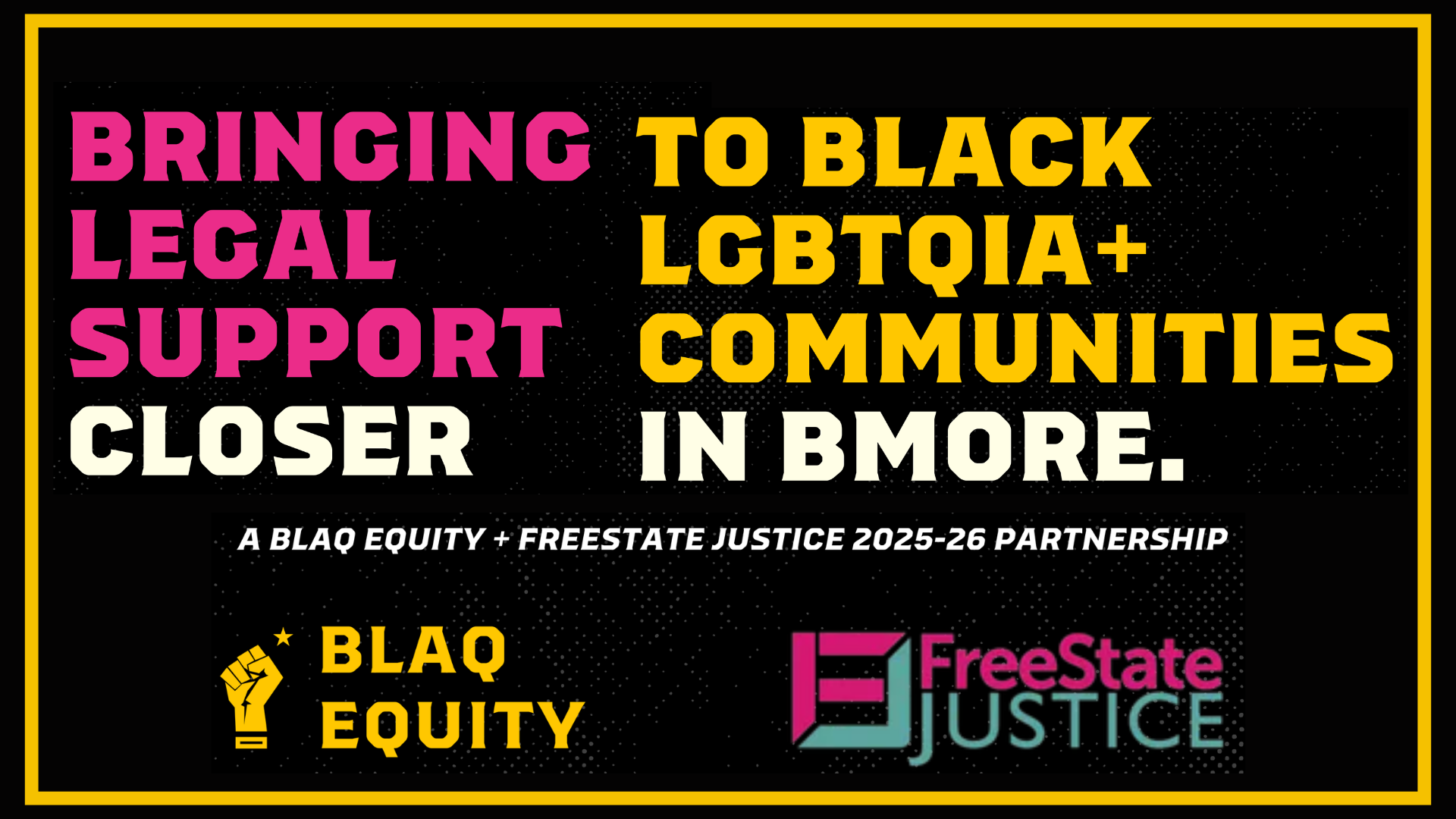
FreeState Justice and BLAQ Equity Baltimore (two of Maryland’s leading LGBTQ+ advocacy organizations) are proud to announce a formal partnership designed to deepen community engagement and amplify support for Black, trans, and gender-expansive Marylanders. BLAQ Equity Baltimore is a community-driven force for Black LGBTQIA+/SGL (Blaq) Marylanders. For more than two decades, it has worked tirelessly to showcase and preserve the cultural pride of Blaq communities, integrating principles of self-determination and transformative justice into the daily lives of everyone they interact with. Similarly, FreeState Justice has worked for many years as Maryland’s only statewide LGBTQ+ legal advocacy organization, bringing life-saving resources to those who need them most. Through pro bono legal services, community programming, and legislative advocacy, it fights daily to make Maryland a state where everyone can thrive. Together, the organizations are joining forces to build a more inclusive and equitable Maryland for all. “This partnership is about building power from the inside out,” said Phillip Westry, Esq., Executive Director of FreeState Justice. “BLAQ Equity Baltimore’s work is rooted in the same values that guide ours — dignity, self-determination, and a refusal to leave anyone behind. By joining forces, we’re investing in the collective liberation of every Blaq individual in Maryland.” This partnership includes a shared workspace, cross-organizational programming, and aligned advocacy initiatives, creating a unique model of collaboration that honors both organizations’ missions and strengths. With BLAQ Equity Baltimore now operating from FreeState Justice’s office, these organizations will be able to provide comprehensive support to any client in need. “This partnership will help meaningfully and intentionally bridge the gap between FreeState Justice and Black LGBTQIA+/SGL communities in Baltimore who may not always be aware of the legal and advocacy resources available to them,” said Christopher Henderson-West, Co-Executive Director of BLAQ Equity Baltimore . “It’s an important step in building awareness, establishing sustainable access, and providing direct support where it’s needed most. A beneficial and advantageous collaboration that has the potential to advance equity and inclusion not only citywide, but statewide." As two organizations committed to disrupting systems of harm and building infrastructure for healing and growth, this partnership represents a new chapter in Maryland-based LGBTQ+ advocacy. With each collaboration, FreeState Justice and BLAQ Equity Baltimore will center Black, trans, and gender-expansive freedom, steadily working towards cementing Baltimore — and Maryland as a whole — as a national model for inclusion. You can learn more about FreeState Justice here and BLAQ Equity Baltimore here .
By Joel Medina October 15, 2025
FreeState Justice has launched our 2025 FSJ Policy Report!
By Joel Medina October 3, 2025
This week, the Carlton R. Smith Jr. HIV Modernization Act (SB0356) takes effect in Maryland, a historic piece of legislation that repeals decades-old laws that criminalize people living with HIV. This marks a significant victory not only for every Marylander, but for FreeState Justice (Maryland’s leading LGBTQ+ legal services organization) and the broader coalition of advocates who have fought for years to pass this law. Behind this win lies countless hours of relentless advocacy from FreeState Justice, the Maryland HIV Coalition, and more than a dozen local and national partners. After coming close to passage in 2024 but ultimately failing, advocates launched a renewed campaign to carry this bill across the finish line and get it passed on May 20, 2025. FreeState Justice is honored to have played a key role in these advocacy efforts, raising awareness about the benefits of this legislation and implementing numerous community outreach efforts to support its passage. “The passage of this act is a long-overdue step toward justice for people living with HIV in Maryland,” said Phillip Westry, Esq., Executive Director of FreeState Justice . “For too long, outdated laws have targeted and punished people simply because of their HIV status — this legislation corrects that harmful mistake. We’re proud to have helped lead the coalition behind its passage and are honored to uplift the legacy of Carlton R. Smith Jr., whose life’s work made this moment possible.” FreeState Justice would like to extend its deepest gratitude to the partner organizations and legislative champions who helped pass this bill: Chair of the LGBTQ+ Caucus Delegate Kris Fair, Chair of the Judicial Proceedings Committee Senator William C. Smith, and Senator Emeritus Shirley Nathan Pulliam. And, of course, the trailblazer who made this piece of legislation possible: Carlton R. Smith Jr., and his family for so graciously lending his name to this legislation. Carlton R. Smith Jr. is a beloved Black LGBTQ+ and HIV/AIDS activist, affectionately known as “The Duchess” by the many people who knew and loved him. Diagnosed with HIV in 1986 at 21 years old, Carlton turned his diagnosis into decades of advocacy for the dignity of people living with HIV. He co-founded Blaq Equity Baltimore, launched Baltimore BLAQ Pride, and spent his life pushing for policy change rooted in racial justice and LGBTQ+ pride. Carlton passed away in May 2024, and his legacy lives on in every person protected by this law. The passing of the Carlton R. Smith Jr. HIV Modernization Act will be felt most by Maryland’s LGBTQ+ communities—particularly Black and trans Marylanders—who have for too long been over-policed and imprisoned by this state’s outdated laws. By decriminalizing people living with HIV, the law removes a dangerous barrier to care and safety, reducing stigma and making it easier for people to seek related services without fear of prosecution. Not only that, but it also serves as a roadmap for activists across the country to enact similar changes in their own communities. It is truly a monumental piece of legislation, and FreeState Justice is honored to celebrate its taking effect. “The Carlton R. Smith Jr. HIV Modernization Act is proof that policy can evolve to match science, justice, and the lived realities of our communities,” said Ronnie L. Taylor, Community Impact Director at FreeState Justice. “For decades, Maryland’s HIV criminalization laws fueled stigma and fear rather than safety and care. I know how these laws have disproportionately harmed Black and LGBTQ+ Marylanders, pushing too many of us to the margins. This victory honors Carlton’s legacy and shows that when we center dignity and public health, we can rewrite laws that once wrote us out. With this passage, Maryland says clearly: our lives are not crimes.” If you or someone you know has questions about how the Carlton R. Smith Jr. HIV Modernization Act impacts them, please reach out to the FreeState Justice’s legal team here .
By Joel Medina August 14, 2025
FreeState Justice is proud to announce the launch of its 2025–2028 Strategic Plan , a responsive roadmap to guide the organization’s growth and mission of advancing equity for LGBTQ+ individuals across Maryland. The plan officially went into effect on July 1, 2025, following an extensive community-centered planning process. This launch comes at a time of escalating political attacks on LGBTQ+ rights - particularly those targeting trans people - and ongoing cuts to federal funding for vital services. Even in the face of these challenges , FreeState Justice is planning for a future rooted in resilience, with a clear commitment to continuing and strengthening our work for Maryland’s LGBTQ+ communities. “At a time of increasing threats to LGBTQ+ rights, FreeState Justice is responding with clarity and resolve,” said Phillip Westry, Esq., Executive Director of FreeState Justice. “This strategic plan reflects the voices, needs, and hopes of our community—and charts a course for lasting impact.” The development of the plan included community listening sessions, stakeholder interviews, and feedback from clients, resulting in a focused set of strategic priorities: Expand legal services to reach more Marylanders in need Grow outreach efforts to strengthen community engagement Strengthen internal operations for long-term sustainability Advance policy change that creates systemic impact Over the next three years, FreeState Justice will continue its work around policy advocacy, resource navigation, and expanding its pro bono legal services network to reach communities most impacted by injustice in Maryland. These include transgender people, LGBTQ+ youth, older adults, people living with HIV, and any individuals facing marginalization based on their identity. “This plan is not just a document, it’s a call to action,” said FreeState Justice’s Board President, Andrew Adelman, Esq. “We are committed to ensuring that LGBTQ+ people across Maryland can live safely, openly, and with access to the resources and protections they deserve.” You can read the full Strategic Plan here .